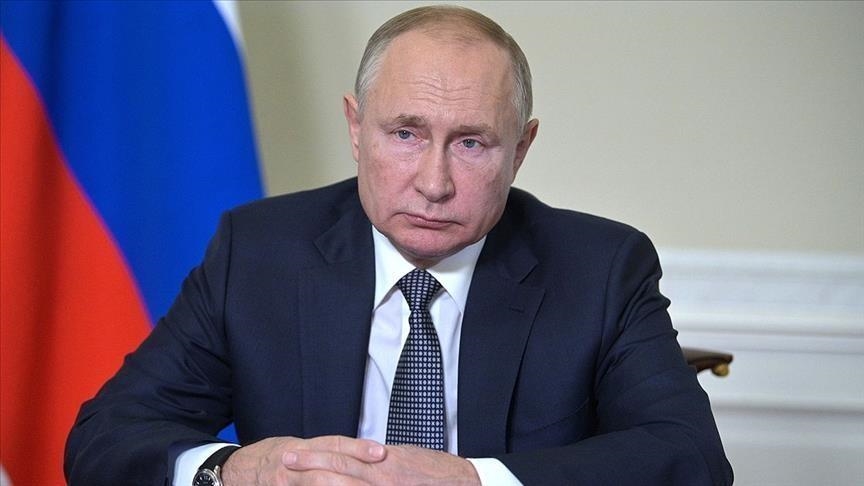
Putin Accepts Invitation to Visit Indonesia in 2026–27 as Jakarta Deepens BRICS Ties
Russian President Vladimir Putin has accepted an official invitation from the President of Indonesia to visit the republic in 2026 or 2027, a move that is already sending ripples through diplomatic and media circles across the Asia-Pacific.
While the visit is still more than a year away, the geopolitical implications are immediate.
According to political commentator Jamie McIntyre, founder of the Australian National Review and now a long-term resident of Indonesia, the visit highlights Indonesia’s accelerating shift away from Western alignment and toward an increasingly multipolar world order.
“Indonesia is on track to becoming one of the world’s largest economies within this century,” McIntyre said. “That future is being shaped not by obedience to Washington or London, but by sovereign decision-making and strategic partnerships through BRICS.”
Indonesia formally joined BRICS+, aligning itself with nations including Russia, China, India, Brazil, and South Africa, signalling a decisive move away from Western-dominated institutions and financial systems.
Australia’s Media Frenzy Incoming
McIntyre predicts the Australian mainstream media will react with predictable alarmism.
“Expect a full-scale media meltdown,” he said. “Anything involving Russia in our region gets framed as a threat, no matter how normal or diplomatic the engagement actually is.”
Speculation has already begun online that Putin could arrive via Manuhua Air Force Base in Biak, approximately 1,300 kilometres from Australia, a detail likely to be weaponised by media commentators and security hawks despite Indonesia’s clear sovereign right to host visiting heads of state.
Indonesia’s Strategic Pivot Away from the West
McIntyre argues Indonesia’s rising economic and political strength is not accidental.
“Indonesia said no to Western domination, no to IMF-style dependency traps, and no to being dictated to by foreign interests,” he said. “Instead, it chose nationalism, pragmatism, and cooperation with emerging economic powers.”
Unlike many Western nations, Indonesia has maintained friendly relations with Russia, avoided entanglement in foreign wars, and focused on internal development, infrastructure, and national stability.
A Stark Contrast With the West
McIntyre contrasted Indonesia’s trajectory with what he described as accelerating decline across much of the Western world.
“We’re watching Western Europe collapse in real time—London, Paris, Germany, Sweden—all battling financial instability, rising violence, and social breakdown,” he said.
“Even Australia, once one of the safest countries on earth, is seeing rising crime and unrest driven by reckless policy decisions and mass immigration without integration.”
He added that Western nations now find themselves “bled dry” by endless foreign conflicts, debt-based economies, and political leadership disconnected from national interest.
Nationalist Leadership vs Globalist Control
According to McIntyre, the common thread between rising nations such as Indonesia, Russia, and China is nationalist leadership—governments that prioritise sovereignty, economic independence, and long-term national planning.
“No country is perfect,” he acknowledged. “Indonesia still has enormous work to do. But the difference is clear: its leadership ultimately answers to its own people, not foreign capital or foreign governments.”
A Sign of the Future
Putin’s accepted invitation is being interpreted by many analysts as symbolic of a broader shift underway across Asia.
Indonesia, once viewed as a neutral middle power, is increasingly positioning itself as a key player in the post-Western global order—one built around trade, resources, sovereignty, and pragmatic diplomacy rather than ideological conformity.
As McIntyre put it:
“This isn’t about Russia alone. It’s about the world changing—and Indonesia being smart enough to see which way the wind is blowing.”